02.4 — Building Agents
Model Selection Guide
Every model option produces deterministic answers — temperature is fixed at 0 across the board, so picking a model is purely a question of capability, output length, and cost, never "creativity."
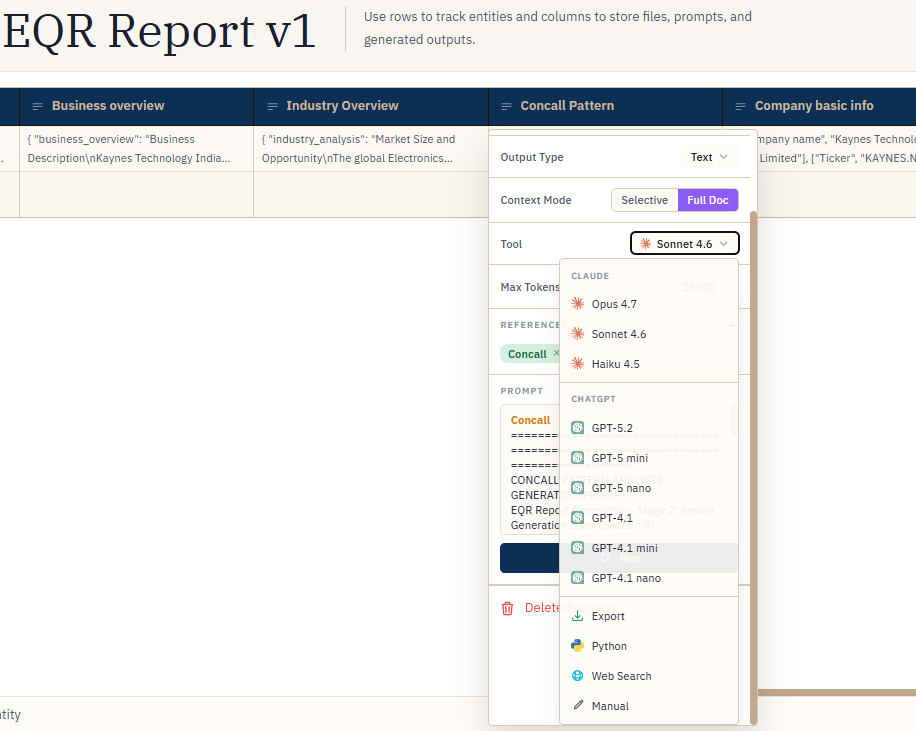
FIG. 6.1 — Nine models across two providers, grouped in the same menu.
| Model | Provider | Max output / run | Pick it for |
|---|---|---|---|
| Opus 4.7 | Claude | 128,000 tokens | The hardest reasoning or longest single answer in the lineup |
| Sonnet 4.6 | Claude | 64,000 tokens | The default — strong general-purpose reading and extraction |
| Haiku 4.5 | Claude | 64,000 tokens | High-volume, simple columns where speed and cost matter more than depth |
| GPT-5.2 | OpenAI | 128,000 tokens | A second opinion from outside the Claude family, or client preference |
| GPT-5 mini | OpenAI | 128,000 tokens | Lighter GPT-5-family runs at lower cost |
| GPT-5 nano | OpenAI | 128,000 tokens | The cheapest, fastest GPT-5-family option |
| GPT-4.1 | OpenAI | 32,000 tokens | Prior-generation GPT, shorter answers |
| GPT-4.1 mini | OpenAI | 32,000 tokens | Lighter prior-generation GPT runs |
| GPT-4.1 nano | OpenAI | 32,000 tokens | Cheapest prior-generation GPT option |
Note
"Max output" is a hard ceiling on how long that model's answer can be, not a target — most cells return far fewer tokens. The platform sets a safe default per property and lets it be raised up to this ceiling when a genuinely long answer (a full summary, a generated table) needs the room.
Tip
Default to Sonnet 4.6 until you've actually seen it get something wrong on your document type. Reach for Opus 4.7 when the document is dense or the question requires real reasoning across it — and remember Full Doc context mode (see Tools & How They Work) is a Claude-only option, so it's not available if you switch a column to a ChatGPT model.